

Selecting a horizontal chemical pump requires careful evaluation of fluid properties, system requirements, and material compatibility. Engineers consider corrosion resistance, efficiency, and ease of integration for safe operation. Recent advances, such as the HGL (W) series, offer energy-efficient and durable solutions that meet strict industry standards in chemical engineering.
Types of Centrifugal Pumps for Chemical Applications
Horizontal Chemical Pump Overview
Horizontal chemical pumps play a vital role in industrial chemical processes. These pumps use a horizontal shaft design, which makes them easy to access for maintenance and inspection. The HGL (W) series stands out as a new-generation horizontal chemical pump. Engineers designed this series with a single pump shaft and jacketed coupling structure, which increases reliability and simplifies servicing. Facilities use these pumps in chemical processing, oil transportation, food production, pharmaceuticals, and water treatment. The HGL (W) series handles fluids with low solid content and viscosity similar to water, making it suitable for many chemical applications.
Tip: Horizontal chemical pumps offer flexible installation and straightforward integration into existing systems.
Horizontal Centrifugal Pumps vs. Other Types
Horizontal centrifugal pumps differ from vertical pumps and other types in several ways. The table below highlights key distinctions:
| Feature | Horizontal Centrifugal Pumps | Vertical Pumps |
|---|---|---|
| Design and Orientation | Horizontal shaft, simple structure | Vertical shaft, submerged impeller |
| Footprint | Larger, needs more space | Smaller, fits tight spaces |
| Flow Rate and Pressure | High-flow rate, high pressure | Suited for limited space, deep wells |
| Maintenance | Easy access for servicing | More effort, impeller submerged |
| Common Applications | Water supply, industrial pressurization | Mining, oil and gas, wastewater |
Horizontal centrifugal pumps excel in high-flow rate and pressurization tasks. Vertical pumps work best in areas with limited space or where the pump must be submerged.
Key Features of Modern Pumps
Modern horizontal centrifugal pumps include several advanced features:
·Material construction uses stainless steel, cast iron, polypropylene, and specialized alloys for corrosion resistance.
·Sealing mechanisms such as mechanical seals or gland packing prevent leaks and improve safety.
·Flow rate control uses variable speed drives and integrated flow meters for precise dosing.
·Manufacturing standards like API OH1 ensure high performance.
·Sealing chambers adapt to different sealing types, enhancing safety.
·Shaft sleeves protect against corrosion, extending service life.
Facilities benefit from these features by achieving reliable operation and long-term durability in chemical environments.
Selecting the Right Horizontal Chemical Pump
Chemical Compatibility and Application Limits
Selecting a horizontal chemical pump begins with a clear understanding of chemical compatibility and application limits. Facilities must evaluate the key factors that influence pump selection, such as fluid chemistry, temperature, and the risk of corrosion or leaks. The materials used in pump construction play a crucial role in preventing dangerous reactions and extending pump life. Stainless steel, specialty alloys, and engineered plastics offer application advantages for handling a wide range of chemicals. The HGL (W) series, for example, is designed to transport fluids with minimal solids and viscosity similar to water, making it suitable for many industrial processes.
Note: Always communicate the specific characteristics of the fluid—corrosivity, temperature, and presence of solids—to the manufacturer. This ensures the pump materials match the application and reduces the risk of rapid deterioration.
Facilities should avoid using pumps in highly corrosive, toxic, or explosive environments unless the pump is specifically rated for such conditions. Improper material selection accounts for approximately 50% of pump failures and 40% of chemical spills. Choosing the right pump materials and sealing mechanisms is one of the key factors for safe and reliable operation.
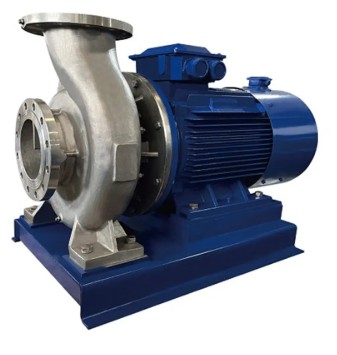
Flow Rate, Pressure, and Power Matching
Matching flow rate, pressure, and power requirements to the process is essential for achieving high operational efficiency. Engineers must calculate the maximum flow rate, often set at 1.1 times the normal rate if unknown, and increase the required head by 5% to 10% to ensure adequate performance. Understanding the liquid’s physical and chemical properties, along with the piping layout and operating conditions, helps determine the best pump type and size.
A step-by-step guide for matching pump specifications includes:
1.Define the process and application.
2.Identify fluid characteristics, including chemical composition and temperature.
3.Assess flow rate and system head.
4.Select the appropriate pump type, such as a horizontal chemical pump for low-viscosity fluids.
5.Choose materials compatible with the fluid.
6.Consider the installation environment and ensure the installation should be absolutely horizontal for optimal performance.
7.Prioritize energy efficiency and lifecycle cost.
8.Ensure compliance with safety standards.
9.Confirm support and service availability.
10.Document selection criteria for future reference.
Proper pump sizing and material compatibility are key factors in preventing energy waste and performance issues. The HGL (W) series offers a wide flow range and head, supporting various operational demands and application advantages.
Installation and Maintenance Considerations
Installation quality directly impacts pump reliability and performance metrics. Facilities must prepare a solid foundation, using reinforced concrete with the specified compressive strength. Surface flatness should be within 0.05mm per 1,000mm, and proper drainage prevents water accumulation. Shaft alignment requires precision tools, and piping must be supported independently to avoid stress on the pump casing.
| Requirement | Details |
|---|---|
| Foundation Preparation | Solid foundation; poor prep causes 60% of failures |
| Compressive Strength | Reinforced concrete, 3,000-4,000 PSI |
| Surface Flatness | Within 0.05mm per 1,000mm |
| Drainage | Prevent water accumulation |
| Shaft Alignment | Precision tools, within 0.002 inches |
| Piping Installation | Independent support, avoid sudden direction changes |
| Electrical Connection | Correct voltage, follow safety protocols |
| Initial Start-Up Checks | Monitor for abnormal vibrations, recheck alignment |
Maintenance challenges such as corrosion, erosion, reduced efficiency, and increased costs can be mitigated by using corrosion-resistant materials, controlling flow velocity, and implementing advanced monitoring systems. Regular inspections and filter systems protect pumps and improve performance metrics. These key factors ensure long-term reliability and safety.
Cost and Reliability Factors
Total cost of ownership (TCO) is a critical consideration when selecting a horizontal chemical pump. Initial purchase costs account for about 10% of TCO, while operating expenses—including energy and maintenance—make up nearly 50%. Energy and maintenance costs are five times more relevant than initial costs. Facilities should focus on high operational efficiency and advanced pump designs to reduce energy consumption and maintenance needs.
| Cost Type | Percentage of TCO | Relevance Factor |
|---|---|---|
| Initial Purchase Costs | ~10% | 10% |
| Operating Expenses | ~50% | 5x more relevant |
Pump failures often result from improper selection or specification mismatches. Facilities must evaluate key factors such as application requirements, fluid type, and energy efficiency. Upgrading to high-efficiency pumps like the HGL (W) series delivers application advantages and reliable performance metrics. Monitoring energy consumption and optimizing system design further reduce costs and improve reliability.
Tip: Document all selection criteria and consult with manufacturers to ensure the pump meets your facility’s needs. This step helps avoid common mistakes and supports long-term operational success.
Selecting a horizontal chemical pump requires careful attention to facility needs and pump features. Engineers match flow rate, head, and accessibility for optimal performance. The HGL (W) series offers reliability and efficiency for modern facilities.
| Step | Description |
|---|---|
| 1. Flow Rate Requirements | Determine the volume of fluid to be moved per unit time. |
| 2. Total Dynamic Head (TDH) | Assess the total resistance the pump must overcome. |
| 3. Fluid Properties | Evaluate viscosity, temperature, and corrosiveness. |
| 4. Environmental Factors | Consider installation type and space constraints. |
Consulting with pump experts helps match solutions to system needs, ensures chemical compatibility, and supports operational success.
FAQ
What industries commonly use horizontal chemical pumps?
Chemical processing, oil transportation, food production, pharmaceuticals, and water treatment facilities rely on horizontal chemical pumps for safe and efficient fluid handling.
How often should facilities perform maintenance on horizontal chemical pumps?
Facilities should inspect pumps monthly and schedule preventive maintenance every six months to ensure reliable operation and minimize downtime.
What factors affect the lifespan of a horizontal chemical pump?
Material selection, fluid properties, installation quality, and regular maintenance all impact the lifespan and performance of a horizontal chemical pump.
Post time: Jan-12-2026