

Along the banks of the Yellow River in Linyi County, Yuncheng City, the Jiamakou Irrigation District stretches across the fertile plains like a giant dragon, continuously nourishing the surrounding farmland and supporting local communities.
As the first large-scale, high-head electrically powered Yellow River water-lifting project, the Jiamakou Irrigation District was originally established in 1958. Over the past two decades, it has undergone significant expansion and ecological transformation. Equipment deliveries for the latest modernization project were carried out in an orderly manner by the end of December 2024, and successful water delivery was achieved after 100 days of dedicated efforts.
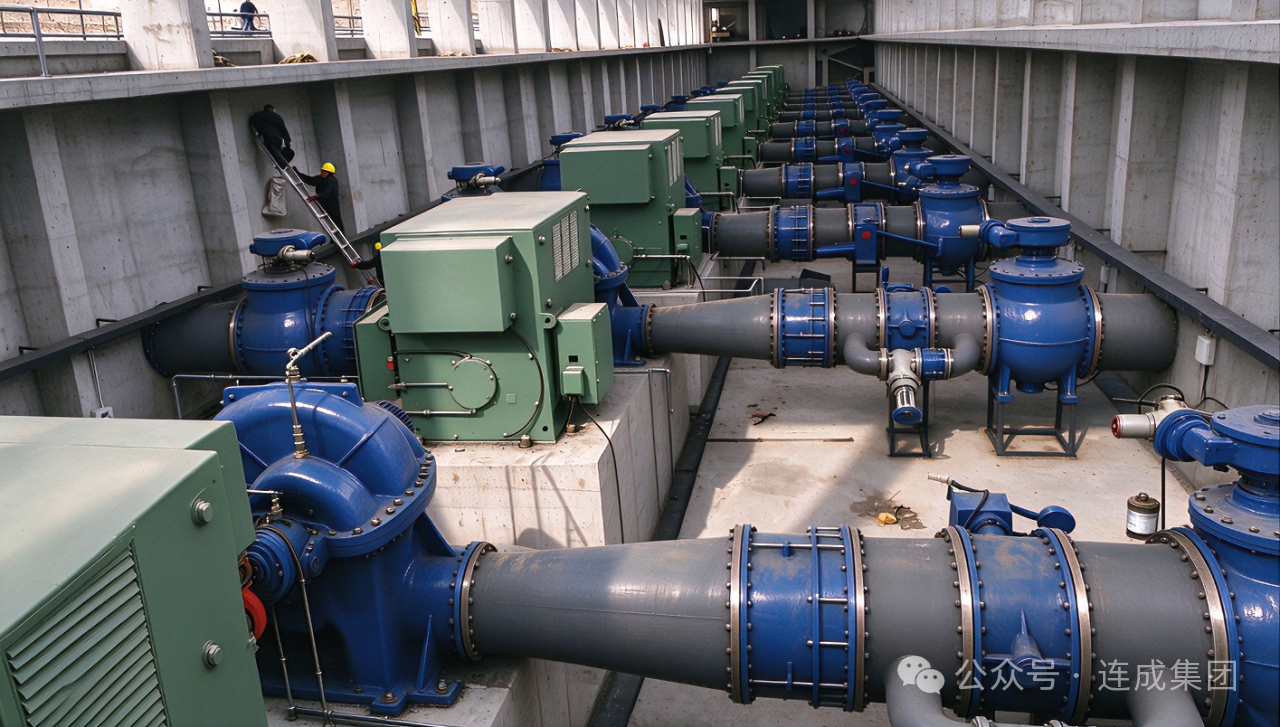
Project Overview
The 2024 Continuation, Supporting Infrastructure, and Modernization Project of the Jiamakou Irrigation District focuses on upgrading pumping station facilities and optimizing system design.
The project emphasizes the importance of comprehensive planning during the early stages of construction, including civil engineering, foundation construction, and hydraulic flow configuration. Particular attention is given to optimizing the number of pumps installed and developing effective flow distribution strategies to ensure efficient and reliable pumping station operation.
Structural Improvements and Material Selection
The project involves analyzing the structural design and clearance control of critical components, including impellers and wear rings.
By addressing the combined challenges of cavitation and abrasive wear, the design incorporates optimized impeller blade configurations and appropriate wear-resistant coatings to enhance hydraulic performance, operational reliability, and equipment service life.
Innovations in Bearing and Lubrication Systems
The project examines the causes of axial thrust and radial forces in pumping equipment and introduces innovative solutions to improve bearing performance and lubrication efficiency.
Drawing on practical experience, the conventional centralized oil lubrication station has been eliminated. Instead, the bearing bushes adopt an oil-ring lubrication design, while the rear-end bearings utilize an oil-bath lubrication system.
Through appropriate bearing selection and optimized lubrication structures, these improvements help address the cleanliness, maintenance, and operational challenges associated with traditional lubrication systems.
The upgraded design also reduces the risk of shutdowns caused by excessive bearing temperatures, contributing to safer and more stable pumping station operations.
Equal-Service-Life Design and Spare Parts Management
The project introduces an equal-service-life design concept for critical components, including impellers, wear rings, and shaft sleeves.
The clearance dimensions between the impeller and wear rings are optimized based on a design reference of 1 cm of effective width per 10 meters of pump head, incorporating an additional safety factor of 1.3.
This approach provides appropriate allowances for pressure differential effects, axial movement, and operational wear, helping the wear rings and impellers achieve comparable service lives.
By extending component replacement intervals and reducing maintenance frequency, the design helps minimize spare parts inventory requirements and further lower overall equipment operation and maintenance costs.
Practical Applications in High-Head Yellow River Pumping Stations
Drawing on practical applications at the Jiamakou First-Stage Pumping Station and similar projects, Liancheng has accumulated valuable experience in improving the performance of double-suction pumps operating under the challenging sediment conditions of the Yellow River.
These applications demonstrate technical advancements in abrasion resistance and cavitation prevention, helping pumping equipment maintain reliable performance and extended service life in sediment-laden water environments.
Promoting Industry Standardization and Market-Oriented Development
The project highlights the importance of encouraging pump manufacturers to adopt practical engineering recommendations and continuously improve product design, manufacturing quality, and equipment durability.
By enhancing equipment reliability, extending service life, and improving energy efficiency, these efforts contribute to energy conservation and reduced operating costs.
Ultimately, such improvements help irrigation district operators reduce maintenance burdens, enhance management efficiency, and achieve more sustainable water resource utilization.
Post time: Oct-29-2026