

What advantages does Liancheng have in energy-saving solutions compared with typical energy-saving companies?
1. Higher cost-effectiveness
Liancheng manufactures its own pumps, while most energy-saving companies do not have production capabilities and instead purchase pumps from manufacturers. This allows us to provide more competitive pricing.
2. More accurate understanding of pump performance
Because we design and manufacture our own pumps, we have a deeper and more precise understanding of pump performance parameters, making our solutions more professional and reliable.
3. More reliable spare parts supply and after-sales service
Spare parts availability and after-sales service are key concerns for customers. Many energy-saving companies are newly established and may not remain in business long-term, creating uncertainty for clients. Liancheng, with over 30 years of history, provides strong assurance in long-term service, spare parts supply, and system reliability.
Which industries can benefit from pump energy-saving solutions?
Industries such as steel, chemical processing, power generation, and water conservancy can all implement energy-saving solutions. In fact, any industry or process involving pumps has the potential for energy optimization.
However, energy-saving projects must consider return on investment (ROI). Therefore, optimization is usually prioritized in applications with higher cost-performance benefits.
Many industrial sectors are not familiar to the general public. To make the concept easier to understand, we will start with industries closely related to daily life and gradually introduce where pump energy-saving can be applied.
From this issue onward, we will explain:
• Where pumps are used in different industries
• Which processes are suitable for energy-saving upgrades
We will keep explanations as simple as possible. For further inquiries, feel free to contact us at +86-21-59132577.
This Issue: Energy Saving in Municipal Water Supply Systems
Tap water is essentially an industrial product. Like other industrial products, it is produced through standardized processes under strict regulatory requirements.
Basic production process of tap water:
Water Source → Intake Pump → Water Treatment Plant → Distribution Pump → End Users
Overview of the Process
The intake pump draws water from the source and delivers it to the water treatment plant.
• The plant processes the raw water to meet national standards.
• The distribution pump then delivers the treated water to residential and commercial users.
Key Pump Systems in Water Supply
There are typically two main pump groups:
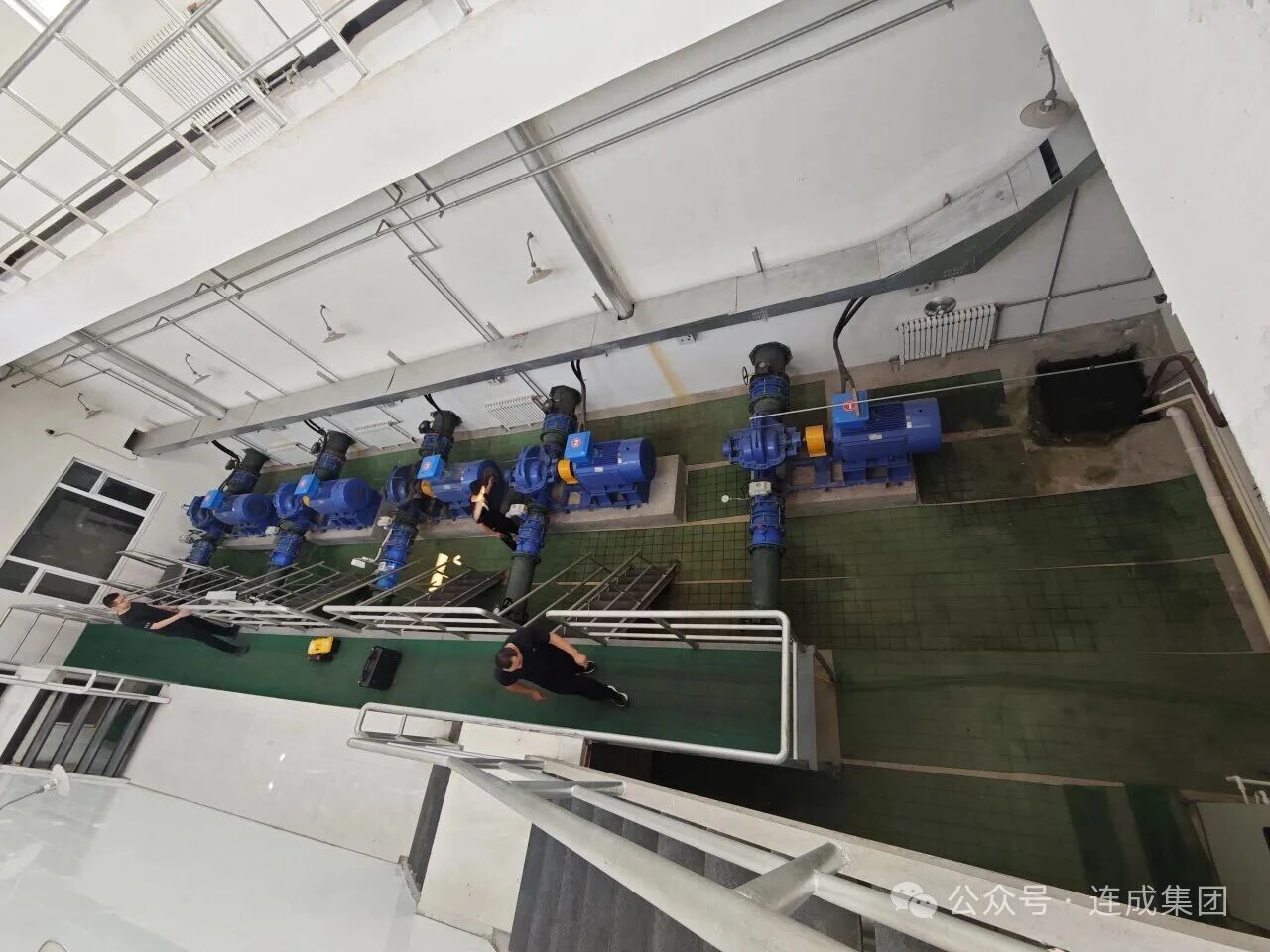
1. Intake Pumps
Responsible for transporting raw water from the source to the treatment plant.
2. Distribution Pumps
Responsible for delivering treated water to end users.
Both are usually single-stage double-suction pumps, operating under:
• Clean water conditions
• Stable working environments
• Low maintenance requirements
These characteristics make them highly suitable for energy-saving retrofits.
Recommendation:
Intake pumps generally operate more stably than distribution pumps, so they are often preferred for energy-saving upgrades when conditions allow.
Special Cases in Water Supply Systems
While the above represents the standard setup, there are variations:
1. Water plants without intake pumps
If the water source is located at a higher elevation than the plant, water can flow naturally by gravity, eliminating the need for intake pumps.
2. Water plants without distribution pumps
If the treatment plant is at a higher elevation than the service area, water may also flow to users by gravity. Although rare, this scenario is theoretically possible.
3. Water plants with booster pumps
In high-rise buildings or elevated areas, water pressure from the plant may be insufficient, requiring booster pumps. This is very common in urban residential systems.
4. Water plants without any pumps
If the water source is at the highest elevation, the plant is mid-level, and users are at lower elevations, the entire system could operate by gravity alone. While theoretically possible, such cases are extremely rare.
Post time: Mar-30-2026