

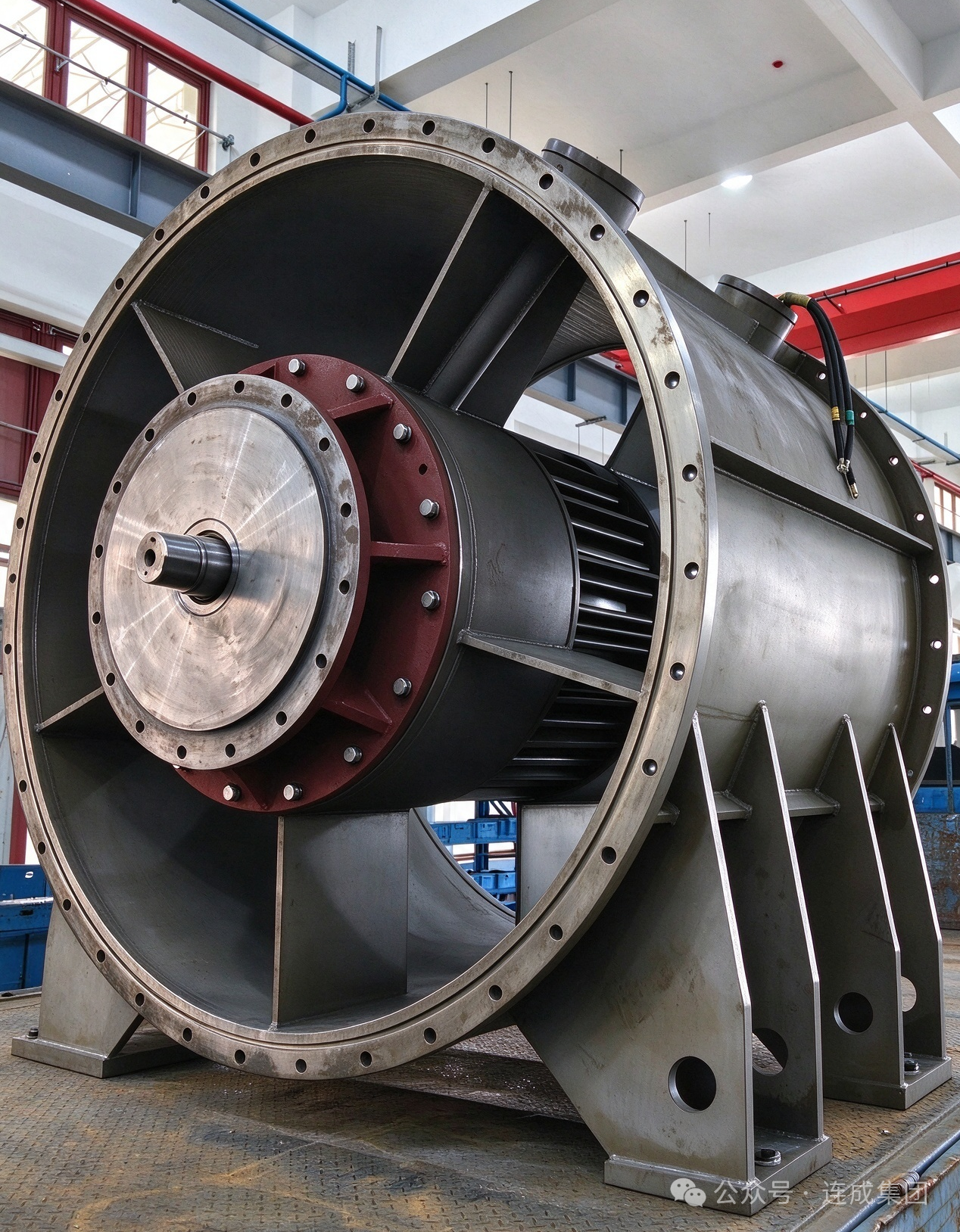
The QGL Submersible Tubular Pump is a new type of integrated electromechanical product that combines submersible motor technology with tubular pump technology. It retains the inherent advantages of tubular pumps while utilizing submersible motor technology to overcome the challenges of motor cooling, heat dissipation, and sealing associated with conventional tubular pumps. The product has been granted a national utility model patent.
The QGL Submersible Tubular Pump features straight inlet and outlet flow passages, resulting in low hydraulic losses and high overall system efficiency. Its horizontal installation significantly reduces investment in excavation and pump station building construction, while allowing the entire pump unit to be lifted out for maintenance.
The pump unit is equipped with a comprehensive submersible protection system and operates with low underwater noise. It is widely used in low-head, high-flow applications such as flood drainage, irrigation, and ecological water transfer projects involving rivers and lakes.
Technical Parameters
- •Pump Diameter: 300–3000 mm
- •Head Range: 1.5–25 m
- •Flow Rate: 0.12–25 m³/s
- •Power: 7.5–2000 kW
- •Voltage: 380 V / 660 V / 6 kV / 10kV
Hydraulic Performance Features
Straight Flow Passages and Low Hydraulic Losses
The inlet and outlet flow passages are nearly straight, without 90° bends. The overall system efficiency is higher than that of vertical submersible axial flow pumps. Under the same operating conditions, energy consumption can be reduced by 5%–10%, providing significant energy savings.
Lower Motor Power Requirements
Under identical operating conditions, the pump requires a lower installed motor power, resulting in reduced operating costs.
Reduced Foundation Excavation
No suction sump is required beneath the pump foundation, minimizing excavation requirements.
Hydraulic Model Optimization Through CFD Simulation and Analysis
The tubular pump impeller blades are designed using a lift-based method with variable circulation and variable meridional velocity distribution, and their hydraulic performance is optimized through Computational Fluid Dynamics (CFD) analysis.
Structural and Motor Features
The pump and motor are directly connected through a common shaft. Large-diameter models can incorporate a planetary gearbox, providing a highly integrated structure. The shortened shaft extension improves shaft rigidity and reduces vibration. The dry-type submersible motor requires no water or oil filling before operation.
The motor housing exchanges heat directly with the surrounding water, maintaining a low operating temperature rise. High-power, high-voltage motors are equipped with internal air circulation cooling channels to support long-term continuous underwater operation.
The unit integrates multiple protection functions, including winding overtemperature protection, oil chamber water leakage detection, chamber flooding detection, overload protection, and phase-loss protection. Monitoring signals are transmitted to the control cabinet through submersible cables, enabling automatic alarms and shutdown protection.
The main shaft seal utilizes a mechanical sealing system. The bearings are designed to withstand radial loads and substantial axial thrust, requiring high reliability of both bearing and sealing components.
Civil Engineering and Installation Features
1. Horizontal Installation with Reduced Civil Engineering Costs
The horizontal arrangement requires a relatively shallow excavation depth and eliminates the need for a deep suction well. Pump stations can also be constructed without an above-ground pump house. Total civil engineering costs can be reduced by 30%–40%, while the smaller footprint and simplified construction requirements help shorten the project schedule.
2. Flexible Installation Options
The pump supports both wet-pit and dry-pit installation. It is also well suited to soft soil foundations due to its distributed foundation loads.
3. Low Noise and Vibration
The entire pump unit operates underwater, resulting in low noise and vibration levels. This makes it particularly suitable for urban landscape waterways and ecological water transfer projects.
Submersible Tubular Pump with Planetary Gearbox
For pumps with diameters of 1600 mm and above, it is recommended to install a planetary reduction gearbox between the submersible motor and the hydraulic impeller section.
High-speed motors are more compact, allowing the motor outer diameter to be smaller than the impeller diameter. This reduces flow passage obstruction, creates a smoother flow path, minimizes hydraulic losses, and improves overall hydraulic efficiency.
The gearbox configuration allows the use of mature high-speed submersible motors, avoiding manufacturing difficulties and higher costs associated with low-speed motors.
The gearbox used in large tubular pumps adopts a planetary gear transmission system. Power is transmitted through a central sun gear, which engages with three planetary gears and an internal ring gear. The gearbox is filled with LCKC320# lubricating oil.
Key Advantages: Compact Size, Light Weight, High Gear Ratio, and High Efficiency.
- The entire unit operates underwater with low noise and vibration.
- The horizontal arrangement reduces excavation depth and allows pump stations to be constructed without an above-ground pump house.
- Bidirectional models can achieve forward and reverse pumping by switching the operating direction.
- The entire pump unit can be lifted out as a complete assembly for convenient inspection and maintenance.
Post time: Nov-18-2026